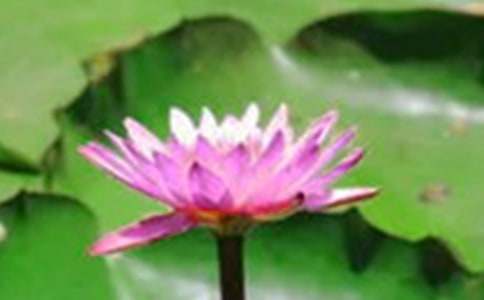
荷花很美麗改成比喻句
Thank you. (Applause.) Thank you so much. Hello, Estonia! Tere Eesti!Thank you, Oskar, for your wonderful introduction and for representing the talent and theenergy and the optimism of today’s Estonia, especially its young people. And Oskar is sittingnext to his father, and his father and I agree that we’re getting gray, so we have to make surethat somebody is coming up behind us. Please give Oskar a big round of applause for the greatjob that he did. (Applause.)

To President Ilves and distinguished guests, to the people of Estonia -- it is a great pleasure tobe with you in this historic city, in this beautiful land. I thank you for the incrediblehospitality that you’ve shown me today. I understand the weather is always like this. (Laughter.) My only regret is that I missed this summer’s Laulupidu. And I’ll try to come backnext time and catch it. I bring with me the friendship of the American people, and I amhonored to be the first President of the United States to deliver an address like this to thepeople of Estonia.
I just had the opportunity to meet once again with the presidents of all the Baltic states, and Ithank the presidents of Latvia and Lithuania for being here. We’re joined by friends fromthroughout the region. And I want to say a special welcome to everyone watching this out inFreedom Square. And I’m especially pleased to see so many young people here today. Because,like Oskar, you are fulfilling the dream that your parents and grandparents struggled for butcould only imagine -- and that is living your lives in free and independent and democraticBaltic nations.
That dream of freedom endured through centuries of occupation and oppression. Itblossomed into independence, only to have it stolen by foreign pacts and secret protocols. Itsurvived the mass deportations that ripped parents from their children. It was defended byForest Brothers in their resistance and sustained by poets and authors who kept alive yourlanguages and cultures. And here in Estonia, it was a dream that found its most eloquentexpression in your voices -- on a grassy field not far from here, when Estonians found thecourage to stand up against an empire and sing “land of my fathers, land that I love.” AndHeinz Valk, who is here today, spoke for the entire Singing Revolution when he said, “One day,no matter what, we will win!” (Applause.)
And then, exactly 25 years ago, people across the Baltics came together in one of the greatestdisplays of freedom and non-violent resistance that the world has ever seen. On that Augustevening, perhaps two million people stepped out of their homes and joined hands -- a humanchain of freedom, the Baltic Way. And they stretched down highways and across farmlands,from Tallinn to Riga to Vilnius. They lit candles and they sang anthems. Old men and womenbrought out their flags of independence. And young parents brought their children to teachthem that when ordinary people stand together, great change is possible. Here in Estonia, whenpeople joined the line, the password was “freedom.” As one man said that day, “The Berlin Wallis made of brick and concrete. Our wall is stronger.” And it was.
Within months, that wall in Berlin was pushed open. The next year, the Baltic peoples finallyvoted in elections. And when the forces of the past made their last grab for power, you stoodup. Lithuanians faced down tanks. Latvians manned barricades. Here in Tallinn, citizens rushedto the TV tower to defend the airwaves of democracy. You won. You reclaimed your countries.And in your new constitution you declared, “The independence and sovereignty of Estoniaare timeless and inalienable.”
But the people of the Baltic nations also knew that freedom needs a foundation of security.So you reached out to join the NATO Alliance. And we were proud to welcome you as new allies,so that those words of your constitution -- your timeless independence -- will always beguaranteed by the strongest military alliance the world has ever known.
Today, people working to build their own democracies -- from Kyiv to Tunis -- look to you forinspiration. Your experience cautions that progress is neither easy nor quick. Here in theBaltics, after decades of authoritarian rule, the habits of democracy had to be learned. Theinstitutions of good governance had to be built. Economies had to be reformed. Foreign forceshad to be removed from your territory.
And transitions of this magnitude are daunting for any nation. But the Baltics show the worldwhat’s possible when free peoples come together for the change that they seek. And in thatgreat contest of ideas -- between freedom and authoritarianism, between liberty andoppression -- your success proves, like that human chain 25 years ago, that our way willalways be stronger.
We’re stronger because we’re democracies. We’re not afraid of free and fair elections, becausetrue legitimacy can only come from one source -- and that is the people. We’re not afraid ofan independent judiciary, because no one is above the law. We’re not afraid of a free press orvibrant debate or a strong civil society, because leaders must be held accountable. We’re notafraid to let our young people go online to learn and discover and organize, because we knowthat countries are more successful when citizens are free to think for themselves.
We’re stronger because we embrace open economies. Look at the evidence. Here in Estonia,we see the success of free markets, integration with Europe, taking on tough reforms. You’vebecome one of the most wired countries on Earth -- a global leader in e-government and high-tech start-ups. The entrepreneurial spirit of the Estonian people has been unleashed, and yourinnovations, like Skype, are transforming the world.
And we’re stronger because we stand together. This year we celebrate the 10th anniversary ofthe Baltics in NATO. A decade ago, skeptics wondered whether your countries were up to thetask. And today, they need only look at our training exercises, where our troops grow evenstronger together, shoulder to shoulder. They can look at Afghanistan, where our forces havesacrificed together to keep us safe -- and where, in just three months, the largest operation inNATO history will come to an end, as planned. There’s no doubt the Baltics have made ouralliance stronger.
And your progress reflects a larger truth: Because of the work of generations, because we’vestood together in a great alliance, because people across this continent have forged a EuropeanUnion dedicated to cooperation and peace, we have made historic progress toward the visionwe share -- a Europe that is whole and free and at peace.
And yet, as we gather here today, we know that this vision is threatened by Russia’saggression against Ukraine. It is a brazen assault on the territorial integrity of Ukraine -- asovereign and independent European nation. It challenges that most basic of principles of ourinternational system -- that borders cannot be redrawn at the barrel of a gun; that nations havethe right to determine their own future. It undermines an international order where the rightsof peoples and nations are upheld and can’t simply be taken away by brute force. This is what’sat stake in Ukraine. This is why we stand with the people of Ukraine today. (Applause.)
Now, let’s put to rest, once and for all, the distortions or outdated thinking that has causedthis crisis. Our NATO Alliance is not aimed “against” any other nation; we’re an alliance ofdemocracies dedicated to our own collective defense. Countries like Estonia and Latvia andLithuania are not “post-Soviet territory.” You are sovereign and independent nations with theright to make your own decisions. No other nation gets to veto your security decisions.
The protests in Ukraine, on the Maidan, were not led by neo-Nazis or fascists. They were led byordinary Ukrainians -- men and women, young and old -- who were fed up with a corruptregime and who wanted to share in the progress and prosperity that they see in the rest ofEurope. And they did not engage in an “armed seizure of power.” After an agreement wasbrokered for constitutional reform, the former president then abandoned his office, andparliament endorsed new elections so that today Ukrainians have a new democratically electedpresident. And I look forward to welcoming President Poroshenko to the Oval Office this month.He was chosen by the people of Ukraine.
It was not the government in Kyiv that destabilized eastern Ukraine; it’s been the pro-Russianseparatists who are encouraged by Russia, financed by Russia, trained by Russia, supplied byRussia and armed by Russia. And the Russian forces that have now moved into Ukraine are noton a humanitarian or peacekeeping mission. They are Russian combat forces with Russianweapons in Russian tanks. Now, these are the facts. They are provable. They’re not subject todispute.
As a result of state-run propaganda, many Russians have become convinced that the actionstaken by their government is strengthening Russia. But reaching back to the days of the tsars -- trying to reclaim lands “lost” in the 19th century -- is surely not the way to secure Russia’sgreatness in the 21st century. (Applause.) It only shows that unrestrained nationalism is thelast refuge of those who cannot or will not deliver real progress and opportunity for their ownpeople at home.
Let’s also be clear where we stand. Just as we refused to accept smaller European nations beingdominated by bigger neighbors in the last century, we reject any talk of spheres of influencetoday. (Applause.) And just as we never accepted the occupation and illegal annexation ofthe Baltic nations, we will not accept Russia’s occupation and illegal annexation of Crimea orany part of Ukraine. (Applause.)
As free peoples, as an Alliance, we will stand firm and united to meet the test of this moment,and here’s how.
First, we will defend our NATO Allies, and that means every Ally. In this Alliance, there are noold members or new members, no junior partners or senior partners -- there are just Allies,pure and simple. And we will defend the territorial integrity of every single Ally. Today, moreNATO aircraft patrol the skies of the Baltics. More American forces are on the ground trainingand rotating through each of the Baltic states. More NATO ships patrol the Black Sea. Tonight, Idepart for the NATO Summit in Wales, and I believe our Alliance should extend thesedefensive measures for as long as necessary. Because the defense of Tallinn and Riga andVilnius is just as important as the defense of Berlin and Paris and London. (Applause.)
During the long Soviet occupation, the great Estonian poet, Marie Under, wrote a poem inwhich she cried to the world: “Who’ll come to help? Right here, at present, now!” And I say tothe people of Estonia and the people of the Baltics, today we are bound by our treaty Alliance.We have a solemn duty to each other. Article 5 is crystal clear: An attack on one is an attackon all. So if, in such a moment, you ever ask again, “who will come to help,” you’ll know theanswer -- the NATO Alliance, including the Armed Forces of the United States of America, “righthere, [at] present, now!” (Applause.) We’ll be here for Estonia. We will be here for Latvia. Wewill be here for Lithuania. You lost your independence once before. With NATO, you will neverlose it again. (Applause.)
Second -- and in addition to the measures we’ve already taken -- the United States is workingto bolster the security of our NATO Allies and further increase America’s military presence inEurope. The new initiative I proposed in Warsaw this spring includes several elements, andwe’re working with Congress to get it done. Here in the Baltics, it would mean positioning moreAmerican equipment so it’s ready if needed. It would mean more training and exercisesbetween our militaries. And it would mean more U.S. forces -- including American boots on theground -- continuously rotating through Estonia and Latvia and Lithuania.
Third, NATO forces need the ability to deploy even faster in times of crisis. This week, ourAlliance must unite around a new plan to enhance our readiness. And that means we need tostep up our defense planning, so we’re fully prepared for any threat to any ally. It also meanswe need to have the infrastructure and facilities that can receive rapid reinforcements, includinghere in the Baltics. We need to enhance NATO’s Rapid Response Force so it can deploy evenmore quickly and not just react to threats, but also deter them.
And even as we meet conventional threats, we need to face other challenges. And thatincludes propaganda campaigns that try to whip up fears and divide people from one another.We reject the idea that people cannot live and thrive together, just because they have differentbackgrounds or speak a different language. And the best antidotes to such distorted thinkingare the values that define us. Not just in the Baltics, but throughout Europe, we mustacknowledge the inherent dignity and human rights of every person -- because ourdemocracies cannot truly succeed until we root out bias and prejudice, both from ourinstitutions and from our hearts. We have to uphold a free press and freedom of speech --because, in the end, lies and misinformation are no match for the truth. We have to embraceopen and inclusive societies -- because our countries are more successful and more prosperouswhen we welcome the talents of all our people, including minorities. That’s part of the work thatwe must do. (Applause.) That's the example we must set.
Fourth -- even as we keep our countries strong at home, we need to keep our Alliance strong forthe future. And that means investing in capabilities like intelligence and surveillance andreconnaissance and missile defense. And here in Europe, nations need to do more to spurthe growth and prosperity that sustains our alliance. To its great credit, Estonia stands out asan ally that contributes its full share -- its full two percent of GDP -- to the defense of ouralliance. And Latvia and Lithuania have pledged to do the same. So this week -- that's worthapplause. (Applause.) So this week’s summit is the moment for every NATO nation to step upand commit to meeting its responsibilities to our alliance. Estonia does it; every ally must do it.
Fifth -- we must continue to stand united against Russia’s aggression in Ukraine. (Applause.)Keep in mind that, repeatedly, President Putin has ignored the opportunity to resolve thecrisis in Ukraine diplomatically. The United States, the European Union, our partners around theworld have all said we prefer a diplomatic solution. But in light of Russia’s unwillingness toseize that opportunity, we have come together to impose major sanctions on Russia for itsactions. And make no mistake, Russia is paying a price. Capital is fleeing, foreign investment isplummeting -- because investors know that today’s Russia is a bad bet, given its behavior. TheRussian economy has slipped into recession. Its energy production -- which is the engine of theRussian economy -- is expected to drop. Its credit rating is near junk status. The ruble justfell to an all-time low. In short, Russia’s actions in Ukraine are weakening Russia. Russia’sactions are hurting the Russian people.
And it doesn’t have to be this way. We have no interest in weakening Russia. It’s a nation witha rich history and a remarkable people. We do not seek out confrontation with Russia. Overthe past two decades, the United States has gone to great lengths to welcome Russia into thecommunity of nations and to encourage its economic success. We welcome a Russia that isstrong and growing and contributes to international security and peace, and that resolvesdisputes peacefully, with diplomacy.
And in contrast to Russia’s isolation and economic woes today, that path -- which would includea stable and prosperous Ukraine whose sovereignty is respected -- would also ultimatelyresult in greater success and opportunity and respect for Russia. That path remains availableto Russia; that path that will deliver truer progress for the Russian people. But it’s a path thatstarts by Russia changing course and leaving Ukraine so that Ukrainians can make their owndecisions. And I have no doubt that one of their decisions would be to have strong relations withnot just Europe but also with Russia. But it has to be freely chosen.
And this brings me to the final area where our nations have to come together -- in oursteadfast support for those who reach for their freedom. And, yes, that includes the people ofUkraine. And few understand this better than the Baltic peoples. You know from bitterexperience that we can never take our security and liberties for granted. We want Ukrainians tobe independent and strong and able to make their own choices free from fear andintimidation, because the more countries are free and strong, and free from intimidation, themore secure our own liberties are.
So the United States will continue to help Ukraine reform -- to escape a legacy of corruptionand build democratic institutions, to grow its economy, and, like other European nations,diversify its energy sources, because no country should ever be held hostage to another nationthat wields energy like a weapon. (Applause.) We’ll continue to offer training and assistance tohelp the Ukrainian military grow stronger as they defend their country. And since ultimatelythere is no military solution to this crisis, we will continue to support President Poroshenko’sefforts to achieve peace. Because, like all independent nations, Ukraine must be free to decideits own destiny.
And this week, NATO must send an unmistakable message in support of Ukraine as well. OurAlliance has had a partnership with Ukraine for more than 20 years. Ukrainian forces haveserved with distinction in NATO operations in the Balkans and Afghanistan. So in Wales, we’llmeet as an Alliance with President Poroshenko to show that our 28 nations are united in supportof Ukraine’s sovereignty and right to defend its territory.
Now, Ukraine needs more than words. NATO needs to make concrete commitments to helpUkraine modernize and strengthen its security forces. And, by the way, we have to do moreto help other NATO Partners, including Georgia and Moldova, strengthen their defenses as well. (Applause.) And we must reaffirm the principle that has always guided our Alliance -- forcountries that meet our standards and that can make meaningful contributions to alliedsecurity, the door to NATO membership will remain open.
So this is a moment of testing. The actions of the separatists in Ukraine and Russia evoke darktactics from Europe’s past that ought to be consigned to a distant history. Masked menstorming buildings. Soldiers without flags slipping across the border. Violence sending familiesfleeing and killing thousands, including nearly 300 innocent men, women and children from allacross Europe and around the world when that airliner was shot out of the sky. In the face ofviolence that seems intractable and suffering that is so senseless, it is easy to grow cynical,and I think tempting to give in to the notion that peace and security may be beyond ourgrasp.
But I say to all of you here today, especially the young people, do not give into that cynicism.Do not lose the idealism and optimism that is the root of all great change. (Applause.) Don’tever lose the faith that says, if we want it, if we are willing to work for it, if we stand together,the future can be different; tomorrow can be better. After all, the only reason we’re here todayin a free and democratic Estonia is because the Estonian people never gave up.
You never gave up when the Red Army came in from the east, or when the Nazis came in fromthe west. You never gave up when the Soviets came back or when they sent your best andbrightest to the gulag, never to return. You never gave up through a long occupation thattried to break your spirit and crush your culture. Their tanks were no equal to the moral powerof your voices, united in song. Their walls were no match for the strength of your people, unitedin that unbreakable chain. Like the Poles and Hungarians, the Czechs and the Slovaks, and theEast Germans on top of that wall, you were stronger and you always believed, “one day, nomatter what, we will win.”
Today, your example -- your victory -- gives hope to people all over the world. Yes, there will besetbacks and there will be frustrations, and there will be moments of doubt and moments ofdespair. The currents of history ebb and flow, but over time they flow toward freedom --more people, in every corner of the Earth, standing up and reaching to claim those rights thatare universal. And that’s why, in the end, our ideals are stronger. And that’s why, in the end,our ideals will win.
Dignity will win -- because every human being is born equal, with free will and inalienablerights. And any regime or system of government that tries to deny these rights will ultimatelyfail and countries that uphold them will only grow stronger.
Justice will win -- because might does not make right, and the only path to lasting peace iswhen people know that their dignity will be respected and that their rights will be upheld.And citizens, like nations, will never settle for a world where the big are allowed to bully thesmall. Sooner or later, they fight back. (Applause.)
Democracy will win -- because a government’s legitimacy can only come from citizens; becausein this age of information and empowerment, people want more control over their lives, notless; and because, more than any other form of government ever devised, only democracy,rooted in the sanctity of the individual, can deliver real progress.
And freedom will win -- not because it’s inevitable, not because it is ordained, but becausethese basic human yearnings for dignity and justice and democracy do not go away. They canbe suppressed. At times, they can be silenced, but they burn in every human heart in a placewhere no regime could ever reach, a light that no army can ever extinguish. And so long asfree peoples summon the confidence and the courage and the will to defend the values thatwe cherish, then freedom will always be stronger and our ideas will always prevail no matterwhat.
Thank you. And long live our great Alliance. Thank you very much. Thank you. (Applause.)
【荷花很美麗改成比喻句】相關文章:
美麗的荷花的作文(經典)01-05
(經典)美麗的荷花作文03-04
美麗的荷花的作文04-17
美麗荷花作文【精選】05-11
美麗的荷花作文(經典)07-14
美麗的荷花作文11-17
美麗的荷花作文11-30
【精選】美麗的荷花的作文03-23
美麗荷花作文12-14
美麗的荷花的作文11-18
- 相關推薦